
Yom Kippur is the holiest day of the Jewish year and holds the keys to our transcendence. According to the Sages, it’s the only day in which the Satan and the Sitra Achra (the Other Side) has no hold on anyone, provided they prepare themselves for it.
Imagine you had 26 hours to be in a giant room full of gold and jewels, diamonds and pearls, and to take whatever you want, but when the time is up, that’s it; there is no going back. That’s Yom Kippur! Who could waste time sleeping in that room when presented with such an opportunity!
Sadly, many people don’t understand the importance of Yom Kippur and minimize it to a day of suffering, but it’s much more than that. Following are five Kabbalistic secrets of Yom Kippur.
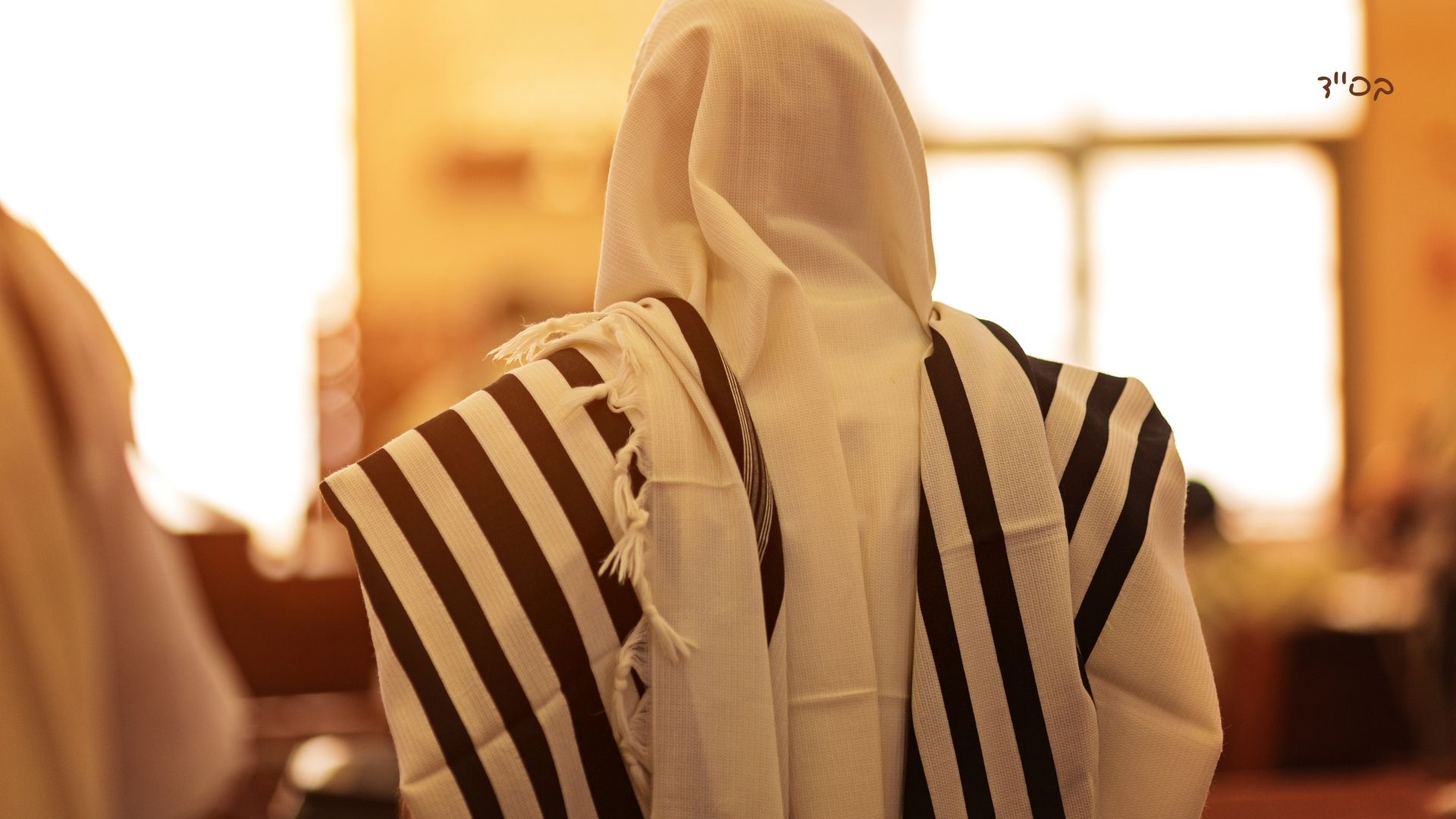
Tallis on the night of Yom Kippur
In explaining Yom Kippur, the Zohar uses the pasuk (verse), “Semolo tachas roshi v’yemino tichabkaini”, which means, ‘Your left hand is beneath my head and your right hand embraces me.’ The Zohar explains that Rosh HaShannah and Yom Kippur are the Smolo, the left side, and Sukkos is the Yemino, the right side. The left side represents Din (Judgment) and the right side Chesed (Kindness).
We see two things from this:
- Rosh Hashannah and Yom Kippur are connected; and
- They are both the left side, of Dinnim (Judgments).
Tallis finishes the work of Rosh HaShannah. Even though it is on Yom Kipur, it completes the Keter of Rosh HaShannah (the Partzuf of Tevunah; and Yom Kipur is the Partzuf of Binah. The Tallit of Yom Kippur is the Keter of Tevunah).
The Arizal explains that the 10 days of Teshuva from Rosh HaShannah to Yom Kippur are incredibly holy and one who fasts on any of these 10 days, excluding Shabbos, Rosh HaShannah itself, and the day before Yom Kippur rectifies everything he has blemished in his entire life on that very day of the week!
And these first 10 days are the hard part of our work in the system of the Creator. After Yom Kippur comes 4 days of “cool-down” until Sukkos. Then we have 7 more days of Chesed and finally, Shmini Atzeret is the great divine union that will bring blessing throughout the whole year.
It is important to note that here we are talking about an entirely different system of Hashgacha (Divine Providence) that is active in this period. That’s something that we don’t have at any other time during the Jewish year, except at Pesach, Sefirat HaOmer, and Shavuos (which is also different system).
Kol Nidre
At the beginning of Yom Kippur, at night, we say Kol Nidre, a declaration of annulment of vows.
During Kol Nidre we invite all people to join us in prayer. Even sinners, and even the people that were excommunicated and sent away. In a spiritual sense, what we are doing is isolating the sins and putting a shield around the sinners so that the sins and all the bad parts of ourselves will not affect us during the holy day of Yom Kippur. Kol Nidre is the quarantining the sins.
In general, whenever you pray with a minyan (a quorum of 10 men), the merit of the congregation helps all those who are present. If one has sins, it brings them all down. If one is very righteous, their merit elevates the congregation. Likewise with individuals, if a person has sins, they are brought down and prevented from connecting to Hashem; if they have merits, they are elevated and helped to connect to Hashem.
During Kol Nidre, the sins are quarantined, so those present will not be brought down by they sins, but can instead receive the help they need to Hashem.
In Sha’ar HaGilgulim, we are told that the Arizal told one of his students to be sure to take out the Torah Scroll during Kol Nidre. This is because the taking out of the Torah Scroll for Kol Nidrei is a tikkun (reparation) for the sin of homosexuality; in a previous life, this student engaged in that sin.
The Night of Yom Kippur
The five prayers we pray on Yom Kippur are like a ladder of spirituality, which we climb to unite completely with Hashem. Again, this is a time when the Sitra Achra has no hold on anyone, so our avodas Hashem (service of HaShem) is much more inspiring. At the end of each of the prayers, we say the Vidui [Confession] and ask for forgiveness. This is not supposed to be mere lip service!
But one could ask why do we need to say Vidui 10 times on Yom Kippur, 5 in the silent prayers and 5 in the repetition. Isn’t once enough?
The answer is that we are rectifying our sins in each of the levels of the ladder. That’s why it’s so important to say the confessional penitence prayer of Vidui in each prayer.
Even the night time of Yom Kippur is special and there is a much work to be done. The Arizal used to stay up all night of Yom Kippur. But, in our case, if we stay up all night we probably will not be able to pray the next day, so it is better to sleep.
And keep in mind it’s important to go to sleep with holy thoughts! For this reason, te Arizal prescribes saying the first four chapters of Tehillim (Psalms) before leaving the synagogue.
Finally, try to meditate on Hashem before going to sleep.
Some people do a Taanis Dibur (a fast of speaking, except for words of Torah ad Prayer), which is a highly beneficial practice on Yom Kippur; all those who are able should do so.
The Five Afflictions of Yom Kippur
Remember, on this day, a Jew is forbidden to eat, drink, use leather shoes, anoint himself, and have marital relations. These five Innuyim (Afflictions) correspond to the five Tefillos (Prayers).
It’s a spiritual principle that whatever you get from the physical pleasure you cannot get in the spiritual pleasure. People complain, ‘I have been learning Torah for so long, but I don’t feel any spiritual pleasure.’
The reason is simple in most cases: over-indulgence in physical pleasures is preventing the spiritual pleasure.
On Yom Kippur, therefore, we remove certain physical pleasures in order to experience the spiritual pleasure of Hashem. That’s why the punishment for violating Yom Kippur is so severe: karet (spiritual excision). One who foregoes this unique opportunity to connect to the Creator severs himself from Life itself.
But what about Shabbos, when we are commanded to indulge in physical pleasure? What should a person do?
On the one hand, we get a higher elevation on Shabbos in the system of the days of the regular spiritual worlds; on the other hand, Yom Kippur is the higher of the two! It all depends on one’s perspective. The details of these systems are very deep and time does not permit us to explain them in this short article.
Exercise for Shabbos
On Shabbos, remember to meditate on Hashem while you are eating the delicious food. Do not distract your mind by learning Torah, it’s better to eat and think about Hashem. Bring Hashem into the experience of physical pleasure!
According to Kabbalah (Arizal), we don’t need the physical pleasure on Yom Kippur because we are receiving abundance from a much higher source, the level of the Hevel (breath) of Binah! Usually we receive our sustenance from Hashem through the channel of physical food, which is from a very external source.
On Yom Kippur, however, we are like angels—but really, we are much higher! This is because the angels receive their sustenance from the external aspects of spirituality, whereas we receive sustenance from the internal aspects of the spirituality on Yom Kippur.
Tzom kal (an easy fast), and gmar chatimah tovah (a good final sealing)!
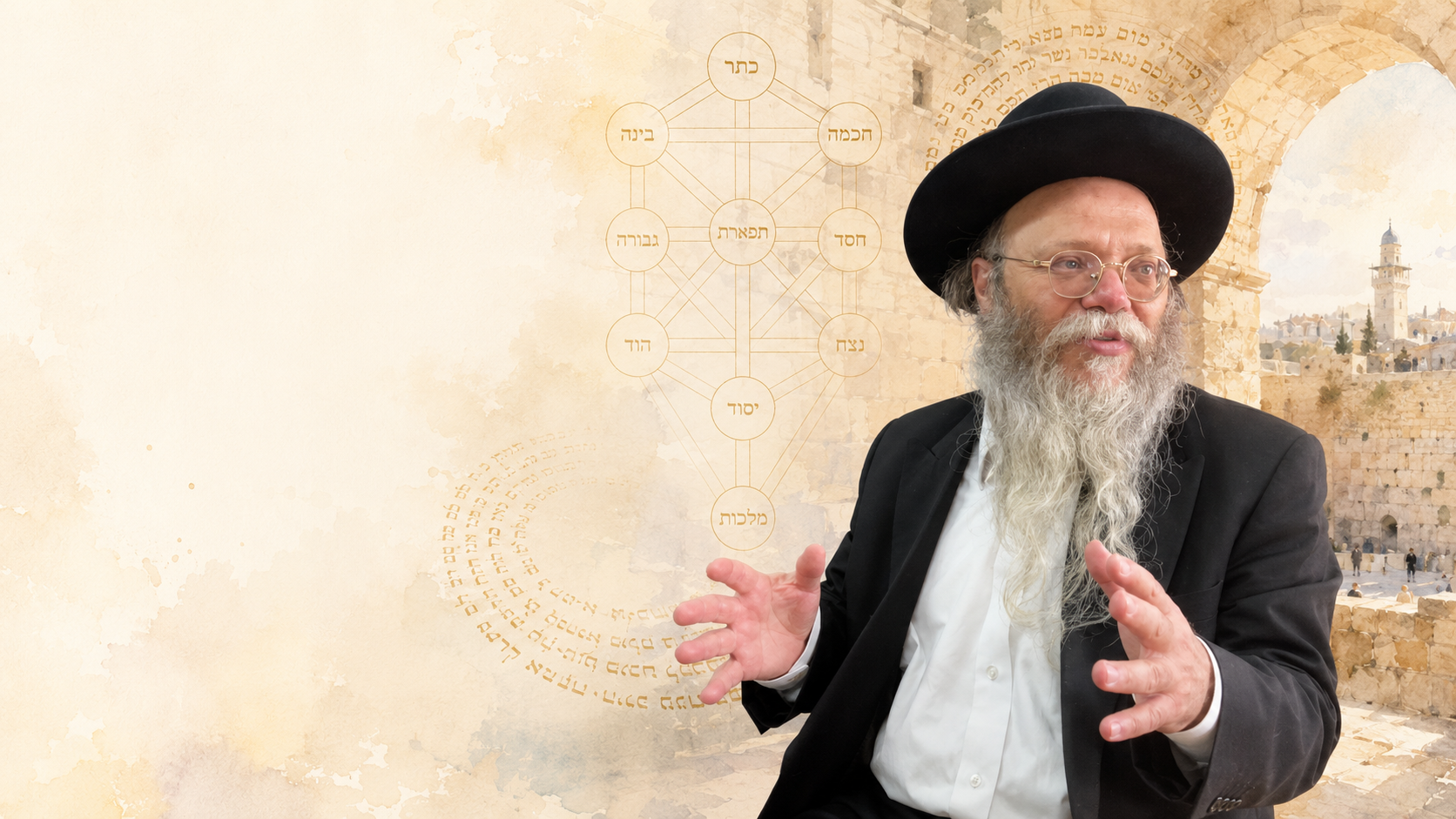
Rabbi Yaakov Avraham Shepherd is the head of Yeshivas HaMekubalim Nefesh HaChaim on Mount Zion, Jerusalem, and Head Kabbalist at King David Kabbalah. He has also been teaching at Diaspora Yeshiva for over 15 years, where he has taught Chumash, Navi, Gemara, Shulchan Aruch and more, in English and Hebrew. More…