”Return, shovavim banim [turning children]; I will heal your turning.’ ‘Here we are; we come to You, for You are HaShem our G-d.”
– Yirmeyahu (Jeremiah) 3:22
Shovavim is a special time when we can achieve rectification through teshuva (returning a.k.a. repentance).
To understand that rectification, the first point we should recognize is that Hashem is Good. Part of the goodness of Hashem is that He gave every Jewish person a holy neshama (soul). The neshama that is like the daughter of the king is part of the Shechina. The Shechina is the extra value received when all the neshamos (souls) of Am Yisrael come together, united.
Every neshama can split into endless numbers of sparks. We can liken that to theoretical physics, which holds that matter can be broken down into smaller and smaller parts. In every generation, smaller particles are discovered. Each time they are discovered, we conclude that this particle is the smallest, but then another layer is discovered that is even smaller than the previous one. Similarly, it is as if we are the special matter of the neshamos. Every neshama is a certain part that can be broken into smaller and smaller parts, G-d forbid, if there is a need to break it down because of sins. These smallest parts are called “nitzotzos” (usually translated as sparks). These sparks have a certain location within the structure of the world. When someone is doing good, they get elevated, but when someone is doing evil, they go down to a lower level.
We have the sparks that are going down when a person is sinning, and this is the concept of Galut HaShechina (The exile of the Shechina). All of those sparks are part of the Shechina, so whenever a spark goes down, a part of the Shechina goes down, which is called the exile of the Shechina. This is connected to a big concept that the Arizal speaks a lot about: every night, Nukvah of Atzilus, which is another way to refer to the Shechina, goes down to the lower worlds of Beria (Creation), Yetzira (Formation), and Asiyah (Action) to collect sparks and bring them back to the Atzilus (Emanation).
Usually, neshamos are found in Beria, Yetzirah, and Asiyah. Only the neshamos of the tzadikim are in Atzilus. Someone that is praying with the proper intentions could perhaps reach the Atzilus for a limited time. Generally speaking, however, most of the neshamos that are not sinning from Am Yisrael are in Beria, Yetzirah, and Asiyah.
So, to collect sparks they go lower than the Beria, Yetzirah and Asiyah, which is into the klipos, to the negative shells that are around the kedusha (holiness). All of the Atzilus, Beria, Yetzirah, and Asiyah are the structure of the kedusha. Besides this, we have the “Noga” and the three layers of the klipos where the sparks are falling into.
Question: Why does the kedusha have more levels than the klipa?
Answer: There are different ways to define the different levels. The easiest way to explain it is to use the concept of the snake. The spiritual snake has the structure of skin, flesh, bone, and marrow inside the bone. The kedusha is Adam (a man). Adam also has skin, flesh, bone, and marrow. Within the kedusha is also gedim (tendons), which are missing in the klipa. One way to explain it is that the tendons are basically tying the bones together; however, in the klipa there is no unity. Every part of the klipa stands for itself. The klipa is always trying to look like the kedusha. It pretends to have unity, just like the United Nations (U.N.), but in reality, each one is trying to swallow the other. They are not really encouraging one another. Whoever is strongest is putting everybody else down. It is not real unity.
It is like the skin of the snake and the skin of Adam are touching each other and this is the “Noga”. The Noga has a positive part and a negative part. When someone is doing something that is wrong but is not real sin, for instance, shogeg (accidentally doing something wrong) or oness (someone not doing something good due to a situation out of his control), these sparks fall down to the negative part of the Noga. It is relatively easy to bring them back to the kedusha. But when someone is sinning with desire, will, and intention, it falls lower, to the flesh, to the bones or, G-d forbid, to the marrow of the bones.
Question: Why is the negative side not symmetrical with the kedusha?
Answer: The positive and negative sides are not symmetrical but they are related and have their counterpart for each other. On the positive side, we have the neshamos of the tzadikim, and on the negative side, we have the neshamos of the reshaim (wicked). As there are levels in the kedusha, there are levels in the negative side like the Geihinom (“Hell”). There are angels for the kedusha and there are angels for the negative side as well. The shin-dalets are a creation that would be between humans and angels, sometimes they are similar to angels and sometimes to human beings. Basically, the job of the angels of the negative side is to punish the evildoers; they are not there to prevent the prayers nor the elevation of the sparks.
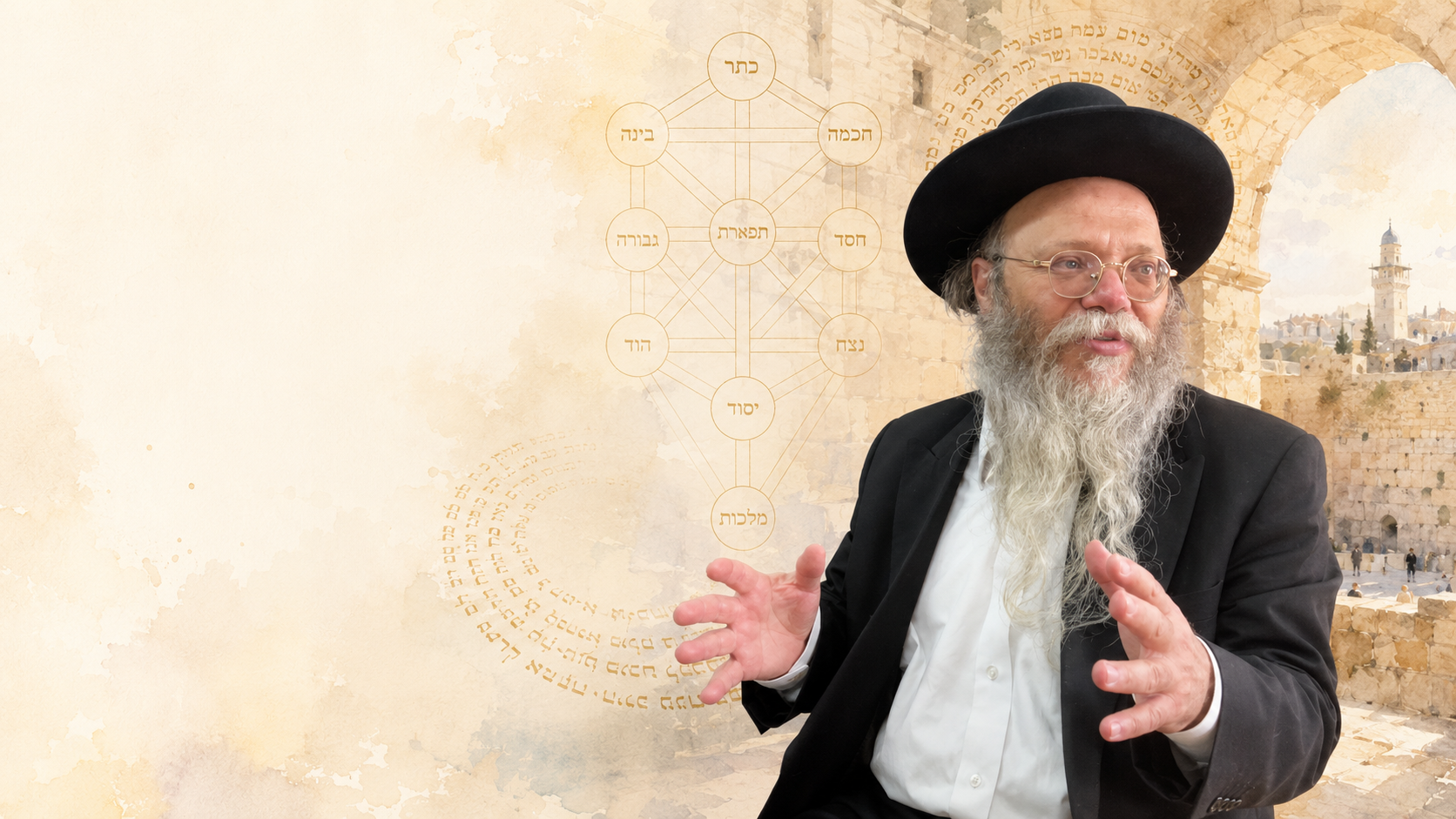
Rabbi Yaakov Avraham Shepherd is the head of Yeshivas HaMekubalim Nefesh HaChaim on Mount Zion, Jerusalem, and Head Kabbalist at King David Kabbalah, having learned Kabbalah with Yeshivas Beit Eil in Jerusalem. He has also been teaching at Diaspora Yeshiva for over 15 years, where he has taught Chumash, Navi, Gemara, Shulchan Aruch and more, in English and Hebrew. More…