In the spiritual realm, there is a profound connection between the concept of the river, referred to as Binah, and Chochma, which lies on the other side of the river. This relationship points to the origin of the souls of Am Israel, which are rooted in the world of Atzilut, specifically in Chochma. It is an immense privilege that the souls of Am Israel originate from such a high spiritual realm. However, the forefather Abraham does not directly connect himself to the river, while Itzchak, through his attribute of gevurah, does. Binah, although not judgment itself, is where judgments emerge, particularly when they are strengthened by Itzchak’s gevurah.
When speaking of Itzchak in this context, we are not just talking about the historical figure but about an attribute of Hashem, who takes on the role of judgment during Rosh Hashanah. The Zohar describes this event as the strengthening of Itzchak’s quality of judgment. As Rosh Hashanah arrives, both the upper and lower worlds come together for judgment. The divine throne is prepared, and the holy King, Hashem, sits to judge the world. At this moment, the mitzvah of blowing the shofar comes into effect. The sound of the shofar is capable of transforming the throne of judgment into the throne of mercy, softening the severity of judgment.
The shofar cannot be made from an ox, as the ox symbolizes judgment, specifically the left side of the divine throne. This understanding is rooted in the Zohar, which explains that we do not want to reinforce the power of judgment by using the horn of an ox. Instead, the shofar is made from a ram, which recalls the ram Abraham sacrificed in place of Itzchak. In this way, the shofar becomes a symbol of mercy, substituting the harshness of Isaac’s judgment. We also learn from the Zohar that the partzufim of Ima (Binah), Zeir Anpin, and Nukva play a crucial role in this process. Binah provides nourishment to Zeir Anpin and Nukva, called the “shofar gadol.” When this nourishment is removed, judgment is strengthened.
The process of judgment on Rosh Hashanah is further understood through the concept of “nesirah” – the separation necessary for Zeir Anpin and Nukva to unify. Originally, Adam and Chava were created back-to-back, and they needed to undergo a separation (nesirah) to face each other and achieve unity. Similarly, Zeir Anpin and Nukva must go through nesirah, which involves a dormita, or a spiritual sleep. During this dormita, their mochin (spiritual mindset and abundance) are removed, and this removal heightens judgment. The removal of the shofar gadol, or nourishment from Ima, triggers the harsh judgment of Rosh Hashanah. By blowing the shofar below, we attempt to counterbalance this removal, awakening the upper shofar – Ima – and transforming judgment back into mercy.
The sound of the lower shofar on Rosh Hashanah ascends to the upper realms, awakening the mochin of Ima to descend once again and restore mercy. The proper order of shofar sounds and the meditations that accompany them are essential to ensure that this awakening occurs, shifting the spiritual energies from judgment to mercy.
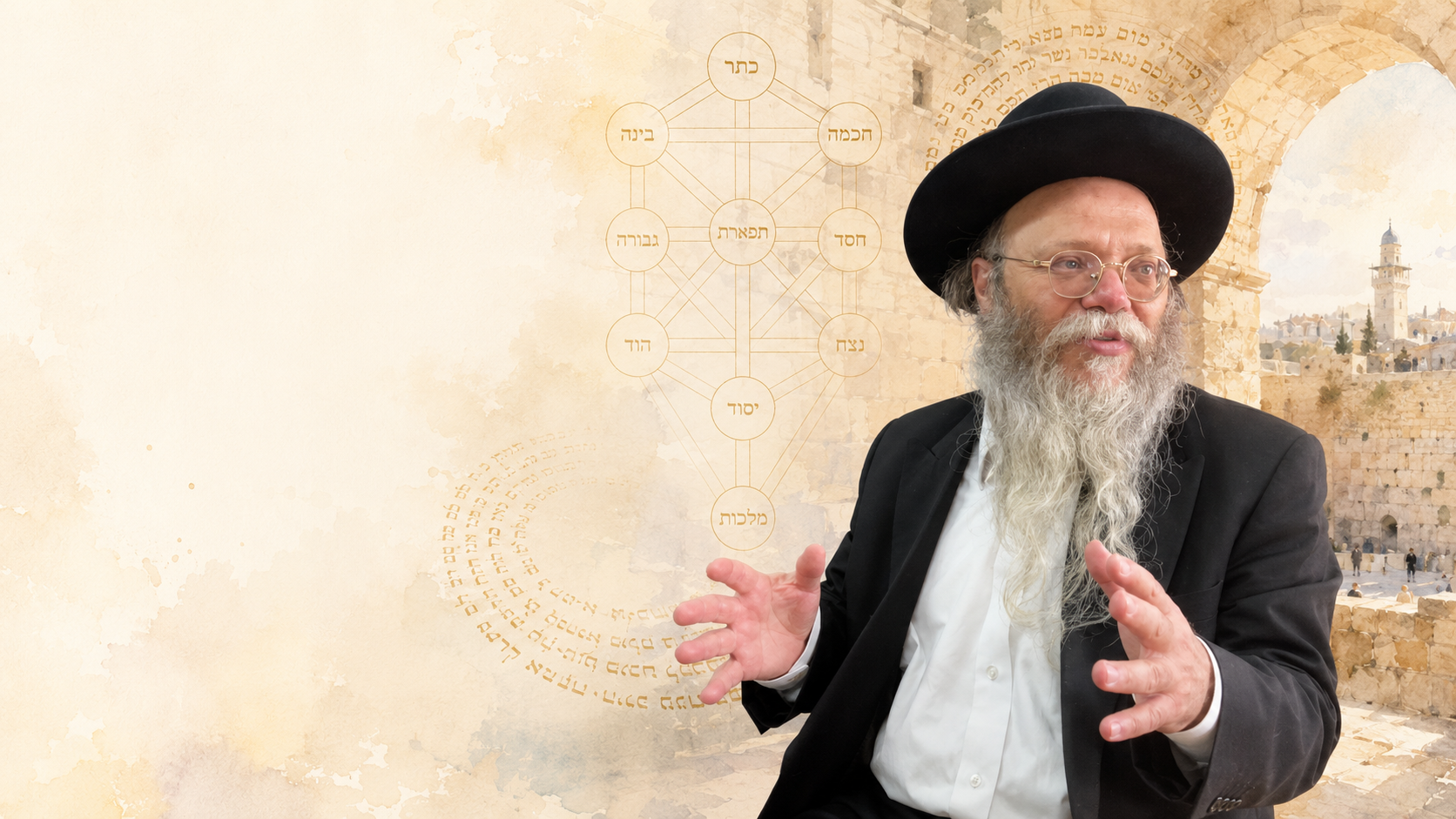
Rabbi Yaakov Avraham Shepherd is the head of Yeshivas HaMekubalim Nefesh HaChaim on Mount Zion, Jerusalem, and Head Kabbalist at King David Kabbalah, having learned Kabbalah with Yeshivas Beit Eil in Jerusalem. He has also been teaching at Diaspora Yeshiva for over 15 years, where he has taught Chumash, Navi, Gemara, Shulchan Aruch and more, in English and Hebrew. More…