

How to Turn the Fire of the Omer into a Permanent Practice
The Question That Appears After Shavuot
We have just completed the forty-nine steps of the Counting of the Omer. Day after day, we climbed the ladder of the middot. We stood on the night of Shavuot and received the Torah as if for the very first time. And now — the Monday after the festival, the Tuesday, the following week, the following month — how do we keep that intensity from silently evaporating?
That is exactly the question answered by this week’s parashah. Parashat Naso presents us with a specific figure whose entire existence is an answer to that question: the figure of the Nazir.
Part One — Who the Nazir Really Is
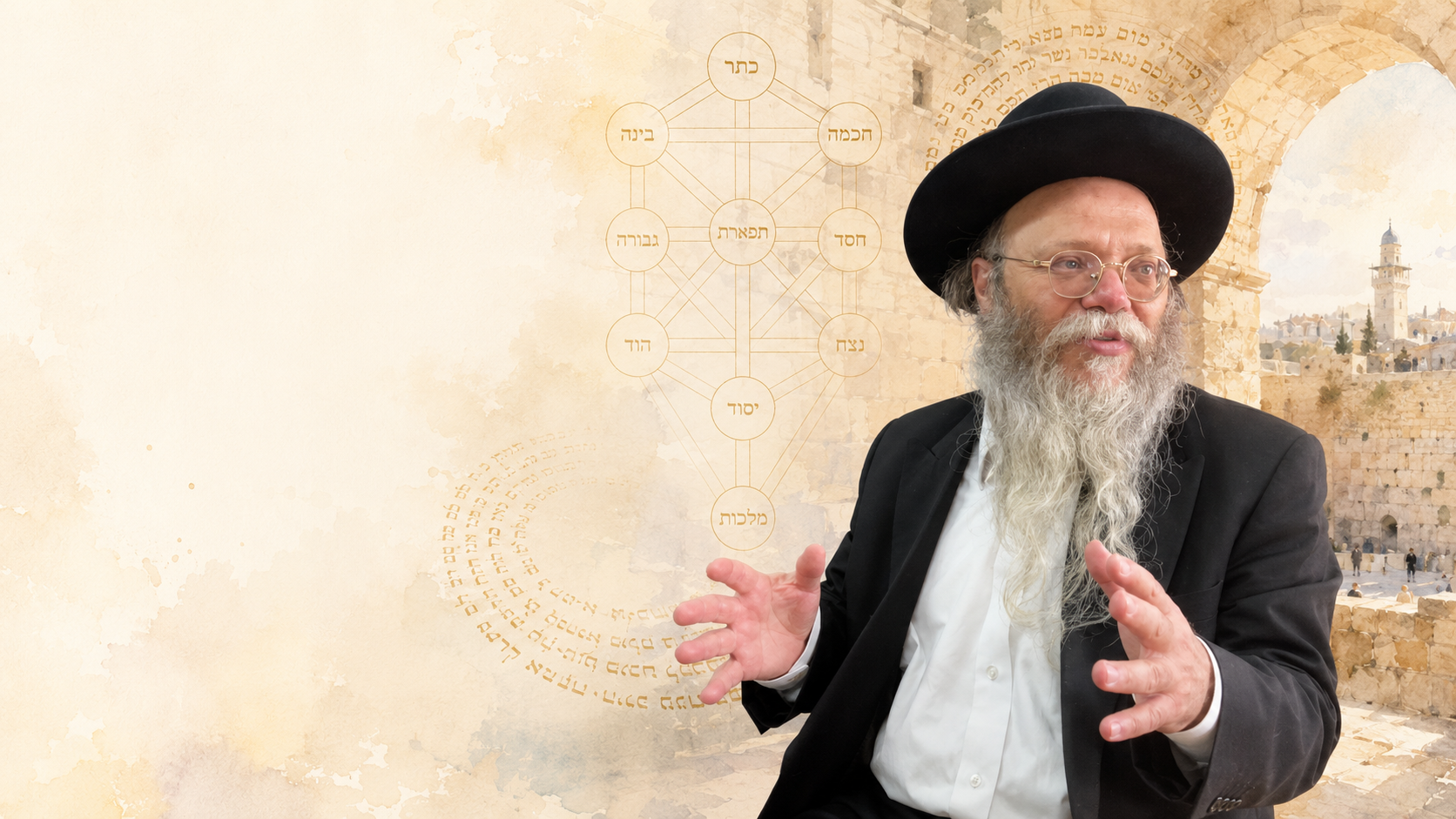
Rabbi Yaakov Avraham Shepherd, based on the Recanati, teaches that the Nazir is not someone who is running away from life. The Nazir is someone who has chosen to enter the “Geder HaChesed” — the boundary of pure Chesed — for a defined period. During the time of his vow, he separates himself from the “left pillar” of Din (Judgment) and clings only to Chesed. That is why the Torah calls him Kadosh — holy.
The classic Nazir takes his vow for thirty days. The number thirty alludes to the lunar cycle, to Malchut, and to the Shechinah that is “established like the moon.” Thirty days of intensity. Thirty days of focused spiritual training. And then he returns to ordinary life — but he is no longer the same person.
This is exactly the model we need after the Omer.
Part Two — Three Vows, Three Pillars
The Nazir takes on three prohibitions, and each one carries deep kabbalistic weight:
One — Wine. Wine is rooted in the left pillar. “Moist grapes” allude to Midat HaDin HaKashah (strict judgment); “dried grapes” allude to Midat HaDin Rafah (soft judgment). By abstaining from wine, the Nazir performs a temporary separation from the extremes of Din. This is the work of the middot — sweetening judgment through kindness.
Two — Hair. Hair alludes to the Tzinorot Elyonot — the upper channels of the Shechinah. Hair continues to grow and does not diminish, reflecting how Divine flow descends without lack. The Nazir lets his hair grow in order to function as a permanent “antenna” for that flow. This is the work of hitbonenut — contemplation — the opening of the higher channels.
Three — Contact with the dead. The Nazir protects the Heichalei Kodesh — the holy chambers of his soul — from the kochot hatumah, the forces of impurity. This is the work of tefillah — protecting the inner vessel in which we stand before our Creator.
Notice the structure. The three vows of the Nazir are the three pillars of daily avodah.
Part Three — From Inspiration to Permanence
What is the difference between the Nazir and a person who is simply pious? The Nazir chooses a period. He is not trying to live this way for his entire life. He takes one month — or two, or six — and says to himself: during this defined period, I channel all my “abundance of mind” toward one single point.
The Rav teaches that every person can adopt this “Nazir model” in order to carry the achievements of the Omer into the rest of the year. Instead of failing at the impossible task of remembering all forty-nine contemplations simultaneously, choose one middah that still needs sweetening, and dedicate a defined period to it.
This is not compromise. This is strategy.
Part Four — How to Build Your Personal Nazir Period
Four practical steps, all based on the Rav’s teaching:
1. Choose one middah only. Look back at your Omer journey. Which middah still needs work? Chesed? Gevurah? Tiferet? Not all forty-nine in parallel. One.
2. Define a period. Thirty days is the Torah standard. One week works. One month works. Forty days work. What matters is that it has a beginning and an end.
3. Build the three pillars each day:
Tefillah — choose one prayer (for example, the Amidah) and remain in it with focused intention.
Middot — one small daily action that trains the chosen middah.
Hitbonenut — fifteen minutes of hafshatat hamachshavah — disconnecting yourself from “the labors and errands of the world” — focused on the middah itself.
4. Keep the channels open. The Rav emphasizes that reciting the Meah Berachot — one hundred blessings a day — functions like the eden, the socket, that keeps the sefiric pillars planted in your physical life.
Closing — The Human Being as Tzelem Elokim
The Nazir is not a special person. The Nazir is a template — a template for what each of us can become during a defined period. That is why the Torah places the laws of the Nazir right next to the Birkat Kohanim — “May Hashem bless you and guard you.” Both figures do the same work: becoming a Tzelem Elokim — an Image of God — visible in this world.
The opportunity before us now, immediately after Shavuot, is the choice between two outcomes: either the forty-nine days of the Omer will become a beautiful memory, or they will become the root of a permanent practice.
The Nazir is there, asking us that question out loud.
To go deeper into Rabbi Shepherd’s teachings on daily avodah and the three pillars — visit kingdavidkabbalah.com
This article is based on the shiurim of Rabbi Yaakov Avraham Shepherd shlit”a, on the commentary of the Recanati, and on his teachings on Parashat Naso.