
The spiritual body that G-d gave us
Beyond our physical bodies, we also have spiritual bodies. And while it may seem at first that we exist on just two levels, there are actually many different levels – 25 in fact.
To understand this, let us begin with our soul. Our soul has five parts – a Nefesh, a Ruach, a Neshamah, a Chayah and a Yechidah, which is the highest part of our being.
We approach our inner being and try to ascend and reach the highest place that we can in our life at that moment, through Jewish meditation, which is called Yichudim in kabbalistic terminology.
Most people do not reach the Yechidah because it is so ascended and removed from everything that seems entirely apparent to us in the physical world. In order to activate the higher parts of our spiritual being and attain our full potential, we need to approach the part of our being that most people do not know how to approach. One way to connect with the Yechidah is to do Unifications of Holy Names. (We work to help you achieve this connection through our Jewish Meditation courses and books, many of which are available free on our YouTube channel.)
The basic understanding is that each part of our spiritual body contains within it all the different parts. In the same way that each one of the 10 sefirot contain another 10 within it, each one of the five parts of our soul contain all the five parts within it – a Nefesh, a Ruach, a Neshamah, a Chayah, and a Yechidah.
So altogether, there are 25 levels; therefore, whatever part of yourself you are in touch with, even if it is only the lowest, which is Nefesh, it is connected to all 25 levels. The highest part of that part where you are holding will function for you as your Yechidah, even though it is not the “real” Yechidah.
Important seasons for the spiritual realm
In the spiritual realm, at different times in the year, month, and week, differing potential can be achieved. For example, the spiritual potential of Shabbat is not the same as that of Yom Rishon. Each chag (holiday) has a greater ability for certain salvations. On Purim, many Sages say, what one davens (prays for) is accepted in Heaven. Think of it like this: it is written that we give to everyone who opens his hands (asking for charity); in the same way, when we ask charity from Hashem, He gives.
Besides seasons that have potential in the spiritual realm, even place has an influence. Just being in Yerushalayim, for instance, provides higher potential. Or being here at Kever David Hamelech. Therefore, imagine the potential for meditations on Shabbat in King David’s tomb with a minyan. Together we can do great things in the world!
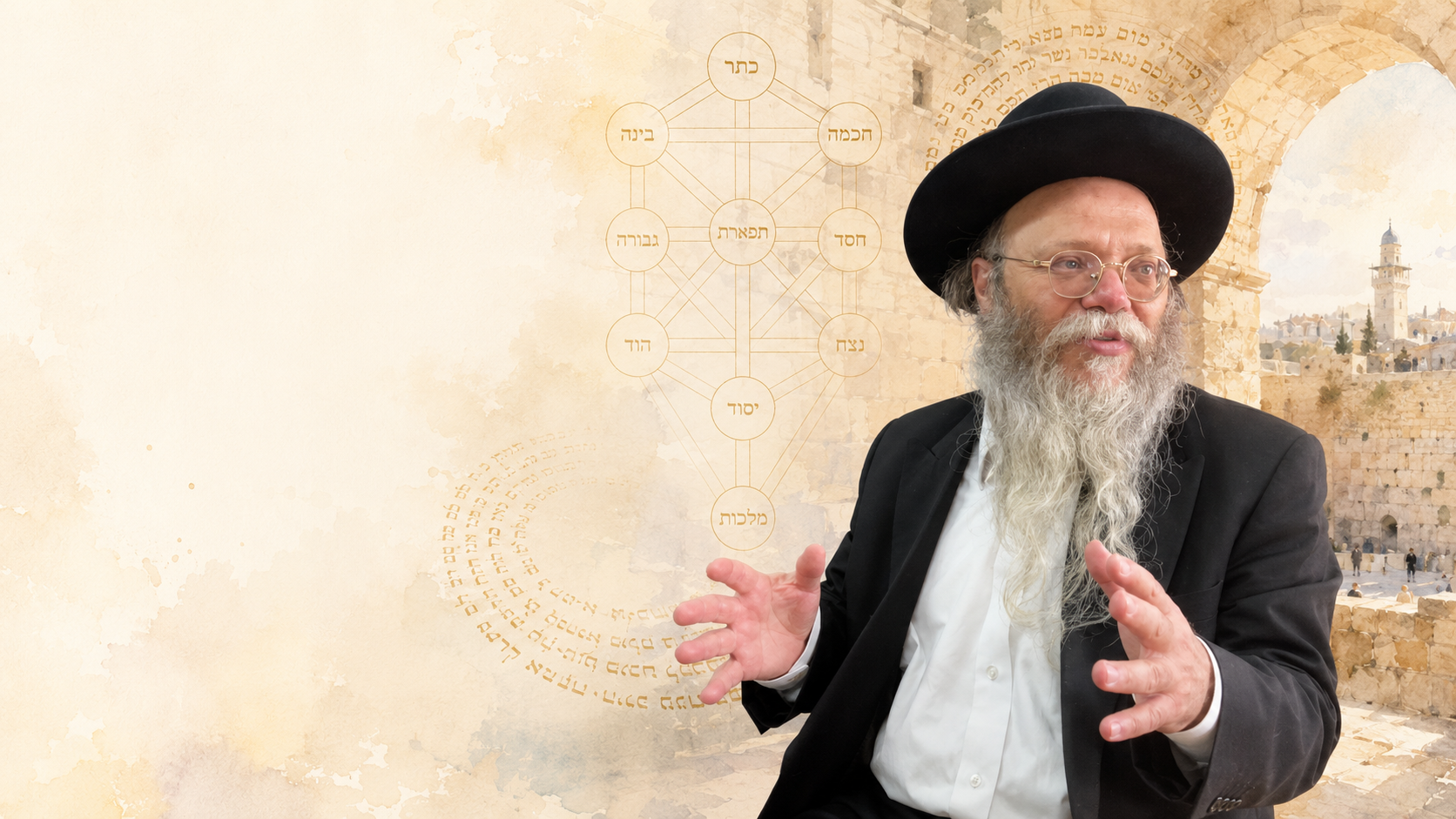
In any time and place, when beginning the practice of meditation, every person begins with a whole structure of himself in that time and place and then ascends and notices different structures such as a Nefesh, a Ruach, a Neshamah, a Chayah, and a Yechidah, or the Ten Sefirot.
Our structure of being should not limit us since the goal is to open ourselves to experience something higher than ourselves. We want to contact a higher system. We should understand that every system is another structure, another chariot, another room in which something even higher can dwell. If we continue to connect one level to another, one structure to another, one chariot to another, one throne to another, at the end, there is Hashem.
We may not immediately contact Hashem, but there is a connection in so much as we are able to link one part to another. As much as we are able to connect, that is the level we can participate and be related to Hashem Himself.
This relationship may remain consistent over time or there might be pauses and limitations. In any event, the connection always remains.
Connecting with G-d
We are always connected with Hashem, no matter what happens. Even if, Heaven forbid, we sinned terribly. That said, anytime something that may seem a tiny bit negative occurs, we find we are losing part of the connection somehow. These two sides seem contradictory. Either you have it or you don’t have it. Right? (But there is gray in the world.)
One could look at the contradiction this way: we have a connection, but we are losing our awareness of the connection. The connection is there, but we do not feel it.
The reality is that we don’t always feel connected to Hashem. The work of meditation is to get to the place where we are aware of that connection and feel that connection. This in no way suggests that before meditation there is no connection. The connection exists but we are unaware of it.
Seeing clearly in order to experience G-d
Through Jewish meditation, one can develop a keen awareness of the construct and purpose of oneself and of all reality. This elevates one to the loftiest spiritual heights and results in intimate connection with G-d. It is important to note, however, that kabbalistic meditations do not exist separate from Mitzvot. In fact, they both work in synergy together to refine and elevate a person. By zealously guarding and learning the details of the Halachas (Jewish law), working on character traits like kindness, humility, forgiveness, patience, Emunah (faith), and Bitachon (trust in HaShem), and following the meditation techniques, one can reach unimaginable spiritual pleasures and intimately connect with G-d. The key is to remember that meditation does not exist separate from Mitzvot. As Eliyahu HaNavi said,
“I call on heaven and earth to witness that any individual, man or woman, Jew or Gentile, freeman or slave, can have Ruach HaKodesh (Divine-Inspiration) descend upon him.”
Constantly living the G-dly experience
All kinds of things stop us from reaching out and feeling and being aware of the connection that Hashem gives to us. That is why we say, “Ratza Hakadodh Baruch Hu Lezakot et Yisroel,” which literally means, “Hashem wanted to give merit to Israel so he gave them bountiful Torah and many Mitzvot.” What is Lezakot? Simply put, give it to me.
But another understanding of lezakot comes from the related word zakut – clear. Hashem wanted that we be clear that we will see through the physical world through all of the veils.
He wanted to give us this experience so that it will be crystal clear. Still, there is no limit to the number of veils one needs to take down. It all depends on how one ended up deep into the negativity that resulted in the veils.
There is a process of removing those veils and becoming clear so that we’ll be able to see, connect, and experience G-d. That process is through Torah and Mitzvot. When we are learning Torah and doing Mitzvot, we are in a process of refining ourselves and making the necessary preparation to experience our connection with Hashem. This by no means suggests that a person should not refine his midos (character traits). He should but this is done through learning Torah and doing Mitzvot.
There’s no limit to how much a person can learn and how much a person can do right. As much as a person is pushing himself, there will be more preparation to become clearer. It is then that one is able to contain increased light without breakdown.
There are people who are not ready. They are not clear. They did not prepare, and they are getting exposed to intense light through some kind meditation or even illicit drugs. Without the necessary preparation, one cannot be ready for this amount of light. This results in the shattering of the vessels, which is spoken of in the Kabbalah.
Rabbi Yaakov Avraham Shepherd is the head of Yeshivas HaMekubalim Nefesh HaChaim on Mount Zion, Jerusalem, and Head Kabbalist at King David Kabbalah. He has also been teaching at Diaspora Yeshiva for over 15 years, where he has taught Chumash, Navi, Gemara, Shulchan Aruch and much more, both in English and Hebrew. More…