

‘After burying his father, Yoseif [Joseph] returned to Mitzrayim [Egypt]; he and his brothers, and all who had gone up with him to bury his father.’
– Bereishis (Genesis) 50:14
In this week’s parasha, Ya’akov [Jacob] passes away after being in Egypt for 17 years.
The Zohar in page 223b speaks about what happens after a person passes away. The language used is unusually harsh about the importance of living in accordance with the Torah during our lifetime. It states that a person who does not follow the ways of the Torah is called “dead”. Such people, who refuse to hear the words of Torah, are blind. They don’t look for the meaning and purpose of life, of creation, and of our existence.
The Zohar explains that there are angels that fly around the world to give messages and warnings as daily reminders for people to keep the Torah. When a person decides not to keep the Torah, the angel that was in charge to make the reminder goes up to the Creator and has to give testimony of what happened with his reminder.
According to the Zohar, every unit of time (seconds, minutes, hours, etc.) is an entity. Each one of those entities come before Hashem to give a testimonial about what was happening when it was his time in the world.
How are the people who refuse to hear and see when they come in front of Hashem? When they come up to the Heavens, they do not have those days to embrace them. The opposite is also true: every day, every hour, every moment that we choose to do good, and make the right decision, do the right thing, say the right word, etc., those days rejoice in our deeds. Every such unit will serve as a defendant for us.
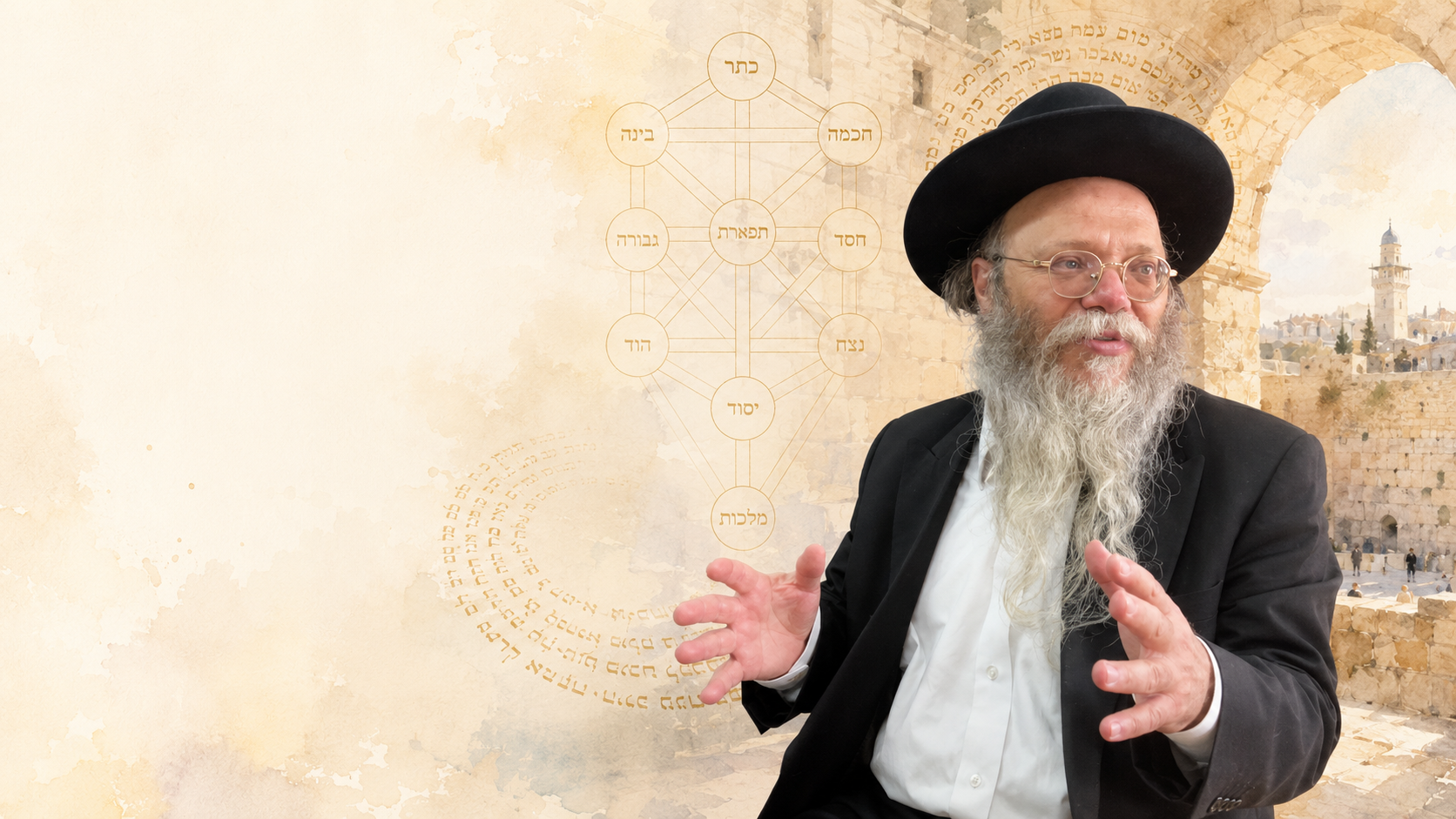
Time is crucial in Judaism. The Arizal says that we need to be aware of the date and time, since each has a connection with a spiritual concept. For example, each day represents a different Sefira. The first day is Chesed (Kindness), the second is Gevurah (Might) and so on until the sixth day, which is Yesod (Foundation) and Shabbat, which is Malchus (Kingship).
Being clothed with spiritual garments
When a person’s neshama (soul) goes to Heaven, it needs respectable spiritual garments. There is a dress code, and when the time comes, and the neshama wants to visit the “chamber” of a great tzadik, they need to be clothed according to the dress code in order to enter.
Those garments are acquired while you are living. These are the days and the moments in which you receive those garments, according to the way you use the time that Hashem gives you. Those are the garments that you will have in the World to Come.
The Zohar explains that when Adam and Chava (Eve) ate from the Tree of Knowledge, they realized they were naked. They were naked because they had sinned and consequently, they lost their spiritual garments.
But what is nakedness within the spiritual world where there is no physical body? Our mitzvos (good deeds done in accordance with the Torah) are the garments of our soul. In the World to Come, the embarrassment of nakedness is the worst punishment of all for the sins we commit in this world. Without garments, we are completely exposed in the spiritual realms. The embarrassment the soul feels being spiritually naked exceeds even the worst embarrassment felt in the physical realm.
In His mercy, however, Hahem dressed Adam and Chava with new garments even though they were not worthy. And what He did for Adam and Chava, He does for us every day. This is the reason why we thank Him in Birkas HaShachar with the blessing: ‘Blessed are You, Hashem, our G-d, King of the Universe, Who clothes the naked.’
Who are the naked ones? All the people who do not do teshuva (i.e., return to HaShem a.k.a. repent) for their sins. They have lost their garments. They no longer have garments for their soul. But Hashem has mercy on them; Hashem has mercy on us. He gives every naked soul a new garment, a new chance to do good things and to earn its own garments through its own merit.
Teshuva and retrieving lost garments
Avraham Avinu (our father Abraham) was so great that he had all of the Seven Sefiros as his garments. His neshama had a lot of clothing. But Iyov (Job) says, ‘I came naked from the womb of my mother and I will leave naked.’ What does that mean? It means he lost all his garments. He did not have the merit to stand in the test that Hashem gave him.
We learn from this that every day, every hour, every moment is important in regards to what we choose to do and how we spend our time. And we learn the importance of teshuva. When we do teshuva the moment that we catch ourselves sinning, getting back our garments is much easier. The longer we wait, the harder it is to regret our behavior and do teshuva. Lost garments are then further away and harder to retrieve.
But where do lost garments go? Nothing is really lost. What someone loses, someone finds.
The Arizal explains that the garments that people lose do not go to waste. The tzadikim (righteous people) have the ability to collect these garments and use them, as well as hold onto them in case the person who made those garments comes back in teshuva. This is the reason why we should have in mind and meditate on asking Hashem to bring our garments back from the Tzadikim in the blessing of the Amidah (Standing Prayer a.k.a. Shemonei Esrei) of the Righteous.
Undoubtedly, the most important thing is to keep doing only good and not to sin at all. And if someone sins to regret it and confess right away to Hashem, saying, ‘Hashem, please forgive me. I did so and so. I am sorry. Please Hashem help me to never do it again.’ This is the basic form of teshuva.
With the help of Hashem, next week, we are starting Parashas Shemos (Exodus) and a six-week period that is the best time of the year to do tikkunim, to fix all the wrong deeds done throughout our life, or previous lifetimes. Whoever feels they are suffering and do not know why they are suffering, there is a good chance it is the result of something he did previously. We have to do tikkunim for ourselves and others around us to fix the wrong things we have done. Every person has to go out of their way to do this.
May Hashem help us and have mercy and guide us in the Way of Truth to find those lost garments and give our souls the glory that they deserve, according to their roots. To connect the soul with the root it comes from, we must work hard in teshuva and tikkunim.
Let us take advantage of all the time we have to learn Torah and to do mitzvos. The opportunity for teshuva and tikkunim is there for you, so just reach out and draw closer to Hashem.
‘Teach us to number our days rightly, that we may obtain a wise heart.’
– Tehillim (Psalm) 90:12
Rabbi Yaakov Avraham Shepherd is the head of Yeshivas HaMekubalim Nefesh HaChaim on Mount Zion, Jerusalem, and Head Kabbalist at King David Kabbalah, having learned Kabbalah with Yeshivas Beit Eil in Jerusalem. He has also been teaching at Diaspora Yeshiva for over 15 years, where he has taught Chumash, Navi, Gemara, Shulchan Aruch and more, in English and Hebrew. More…