

‘He said to them, ‘Hear this dream that I have dreamed.’’
– Bereishis (Genesis) 37:6
Throughout the Tanach, we see that Hashem sent messages through various channels, including Himself, angels, prophecies, and dreams, with the latter two eventually being the main channels of communication. In Parashas Vayeitzei, Ya’akov (Jacob) had a dream, and also in this parasha, Yoseif had a dream. Yoseif is called Baal HaChalomot (the Master of the Dreams)—he had even more dreams than Ya’akov Avinu (our father Jacob).
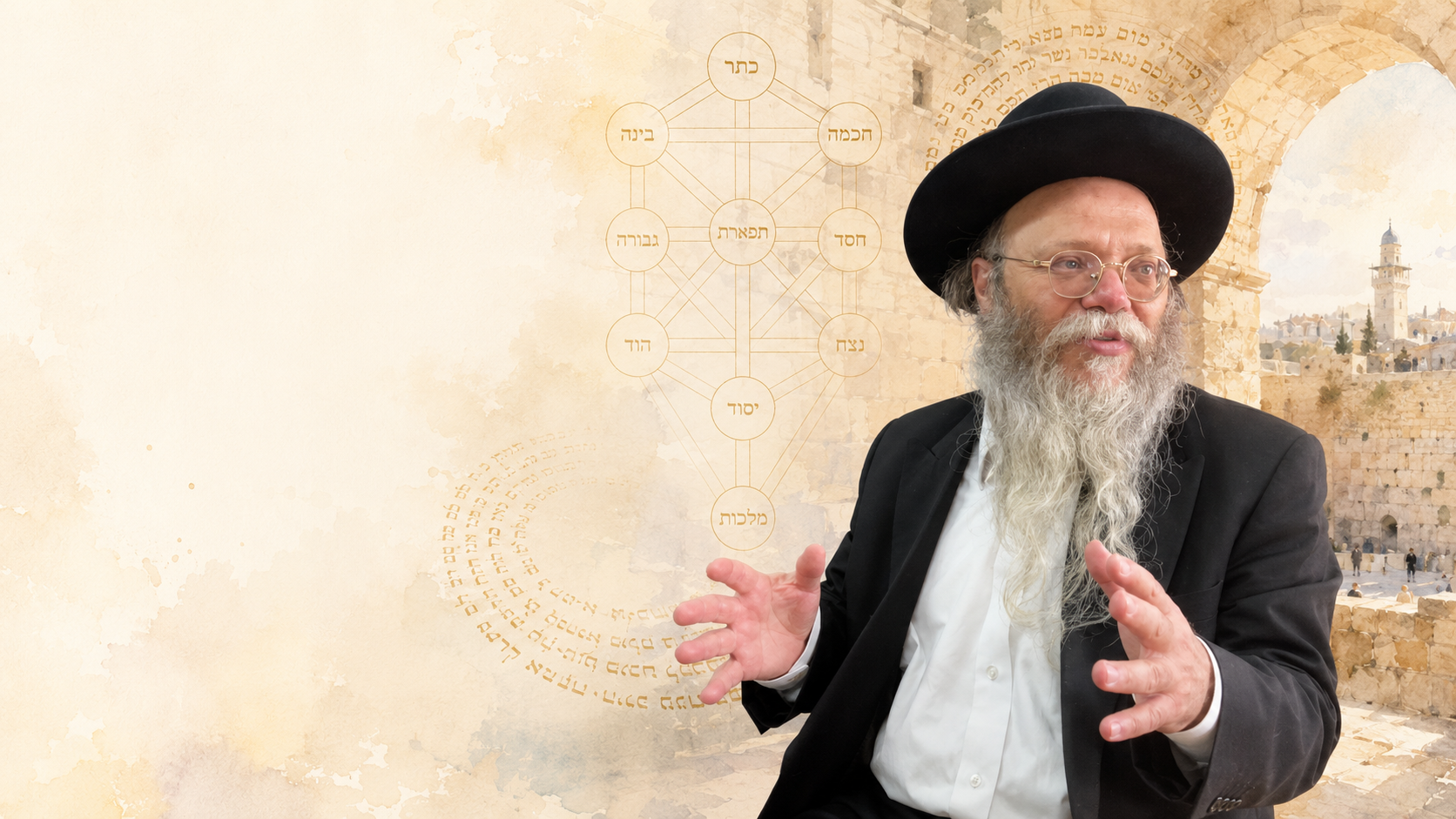
But what is the difference between prophecy and dreams? Prophecy comes from the Sefiros of Netzach and Hod. There is a connection with Malchus since Malchus receives its abundance from Yesod, which receives from Netzach and Hod. The Zohar calls Malchus Aspaklaria de Lo Nahara, which means window that does not shine. Malchus does not have a light of its own, but light from the higher Sefiros comes through it. Prophecy is the connection of the prophet with the Malchus above him. The prophet receives light of the upper Sefiros through that window that does not shine.
As the Gemara in Berachos brings down, dreams are one-sixtieth of prophecy. The Zohar explains that since dreams are only a sixtieth prophecy, they do not have strength. For the dream to be significant and contain deep meaning, Hashem uses the Angel Gavriel (Gabriel) to deliver a message through true dreams for people who need it, like Yoseif for example.
While dreams can contain true vision or prophecy, dreams also contain a lot of waste–things that are neither real nor the true light of Hashem shining through the Sefiros. A dream is a mixture of true and false. It must be interpreted, which is crucial to its manifestation in this world.
The Zohar explains that when Yoseif told his brothers his dream, they themselves provided the path for it to manifest. When they complained, ‘You are going to be our king?’, they actually gave the interpretation of the dream through which it would become reality. We learn from this episode the importance and danger of interpreting a dream. The dream is basically a revelation of a spiritual world, and the interpretation itself functions as the beginning of the manifestation of that spiritual dream in this world.
Then after the person who gives the interpretation opens that gateway, the dream can then be manifested in the world in a higher level of manifestation, which leads to its fulfillment.
What influences dreams?
Beside a dream’s true side, there is also a false side. That side is influenced by daily life, especially what is happening right before sleep. Nowadays, it is common for people to be exposed before they sleep to all kinds of information and images via television, computers, and cellphones. This is not helpful if you want your dreams to be significant. If you want to increase the pure light you experience in your dreams, you should dedicate the time before sleep to your relationship with Hashem.
You can learn Torah before sleeping. You can pray. You can recite the Shema and do meditations of the Arizal. If you do not know these deep meditations, even reciting the words of the siddur and give yourself time to contemplate what they mean to you; meditate on your understanding of the words of the Shema. Doing so will undoubtedly change your experience with your dreams, bezras HaShem.
Iyov (Job) states about prophecy, “בַּחֲל֤וֹם חֶזְי֬וֹן לַ֗יְלָה” / ‘in the dream, a night vision.’ The Zohar says that when a person goes to sleep, the soul leaves the body and can then hear the voices of the upper worlds. When a message is waiting for a person from Hashem, the soul will hear it during sleep and it will manifest in the vision that a person will have in his dream. Every night we have the opportunity to hear words from Hashem, and it depends on the way you go to sleep — what you do before you go to sleep — and, specifically, how much time you spend in your Kiryat Shema Hamita, how much strength you put in the meditation, concentrating on the meaning of the words, at least–on the Kiriat Shema Hamita. If you can learn, learn; if you can listen to a shiur Torah, listen, but don’t waste this very precious time.
‘In the dream, a night vision, when deep sleep falls on men, while they slumber on their beds, He then opens men’s understanding, and by disciplining them leaves His signature; to turn man away from an action, to suppress pride in man.’
– Iyov (Job) 33:15-17
May Hashem help us to receive the light of Hashem that Hashem wants to give us, to become suitable vessels to contain that light, and bezras Hashem to go through the tikkunim that we need to go through to be able not only to experience that light but to share it with others. Amein, ken yehi ratzon. Shabbat Shalom uMevorach. Many, many blessings.
Rabbi Yaakov Avraham Shepherd is the head of Yeshivas HaMekubalim Nefesh HaChaim on Mount Zion, Jerusalem, and Head Kabbalist at King David Kabbalah, having learned Kabbalah with Yeshivas Beit Eil in Jerusalem. He has also been teaching at Diaspora Yeshiva for over 15 years, where he has taught Chumash, Navi, Gemara, Shulchan Aruch and more, in English and Hebrew. More…