
The Guest Who Wrote the Name Wrong
Can a man hold a mitzvah correctly, with every law observed, and still be tearing the Name of Hashem apart?
That is the question Rabbi Menachem Recanati woke up with, on the first night of Sukkot, after a dream he never forgot.
The Dream
An Ashkenazi guest, a chassid named Rabbi Yitzchak, was staying in Recanati’s home for the festival. That night, Recanati dreamed he watched this guest writing the four-letter Name of Hashem, Yud-Hei-Vav-Hei. But the guest wrote it strangely: he formed the first three letters, Yud-Hei-Vav, together, and then set the final Hei down some distance away, disconnected from the rest.
Recanati protested in the dream:
“What have you done?”
“This is the custom where I come from,” the guest answered.
Recanati erased it and rewrote the Name whole. He woke troubled, turning the image over, unable to place its meaning.
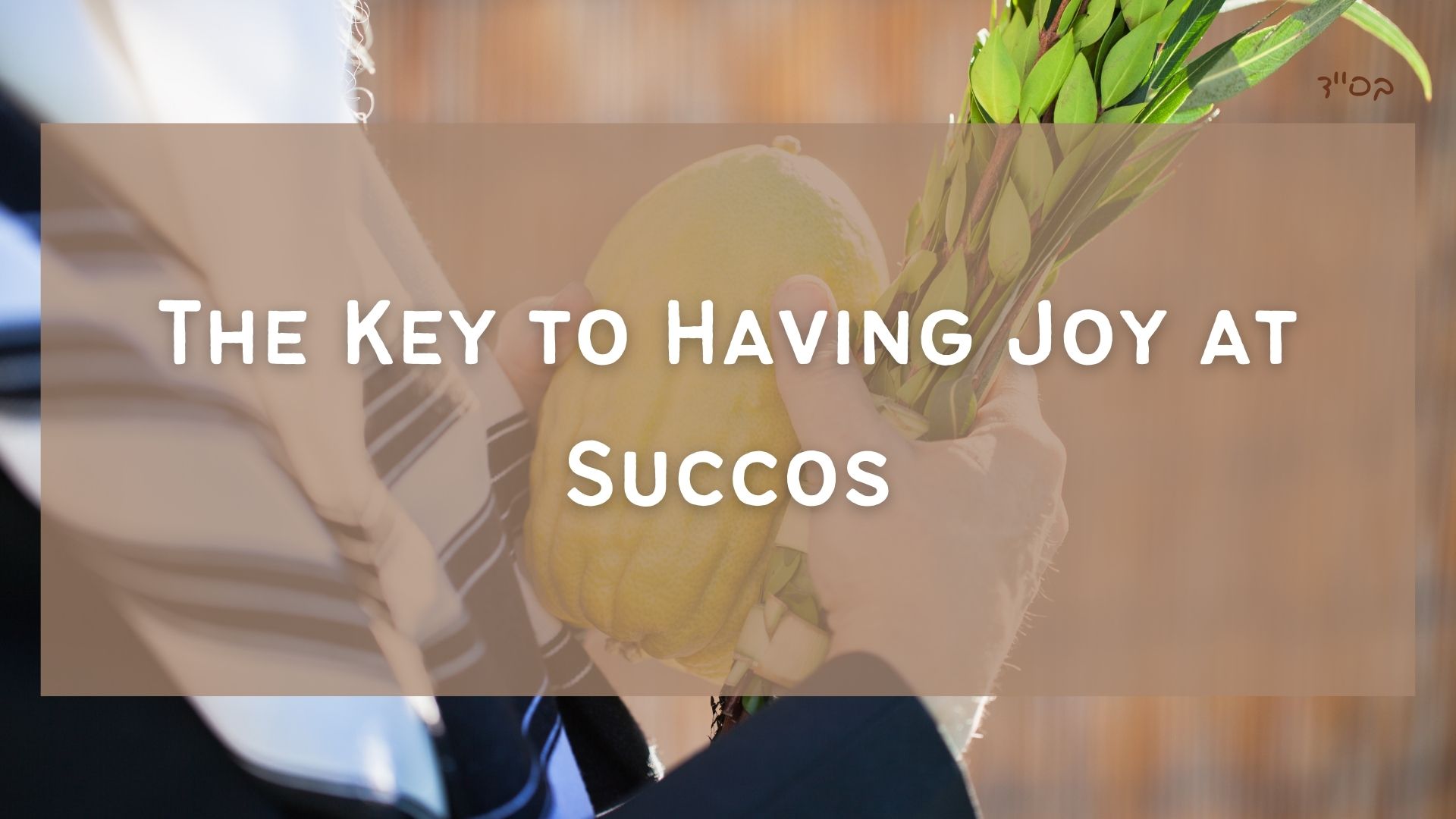
The next morning, at the time of netilas lulav, he understood. He watched his guest take the lulav (the bound bundle of palm branch, myrtle, and willow) and wave it alone, leaving the esrog resting untouched on the table beside him.
There was his dream, in front of him. The bundle was the three letters, Yud-Hei-Vav. The esrog, set apart, was the final Hei. His guest had been dividing the Name of Hashem every single day of the festival, and had no idea he was doing it.
Seven Species, Seven Midos
Why does this matter so much? Because, the Recanati explains in his commentary on Parashas Emor, the Four Species are not really four. Counted individually, they are seven: one lulav, one esrog, three hadassim, two aravos.
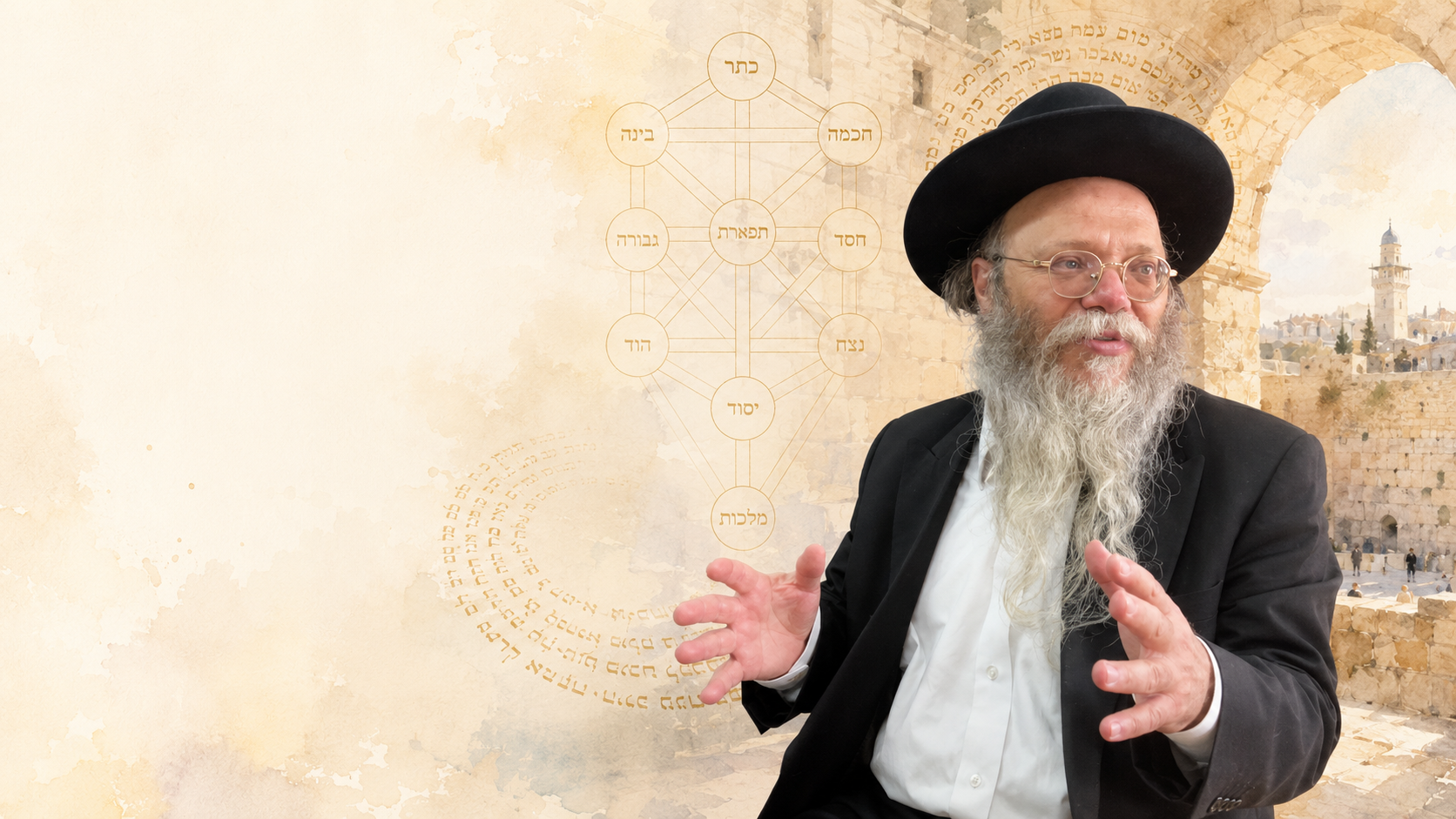
And seven is not a coincidence: it is the exact number of the lower Sefiros, from Chesed through Malchus.
The lulav itself, straight and central like a spine, corresponds to Tiferes. The three hadassim, called in the Zohar “the arms of the world,” correspond to Chesed, Gevurah, and Tiferes together. The two aravos, the plain, humble leaves, correspond to Netzach and Hod, the two supporting legs.
Bound as one unit, the lulav, hadassim, and aravos together form the six-sided structure the Kabbalah calls Zeir Anpin, the masculine configuration of giving.
And the esrog, shaped like a heart, stands for Malchus. The Shekhinah. Knesses Yisrael. The receiving vessel that gathers the light of everything above it.
This is why the esrog is never bound into the lulav bundle with a physical band. Halacha keeps it separate on purpose.
But separate is not the same as disconnected, and that is exactly the distinction Recanati’s guest missed.
The mitzvah is not fulfilled by the bundle alone, nor by the esrog alone. It is fulfilled the instant your hand brings the esrog to touch the lulav, and you wave them together as one.
Touching, Not Merging
There is a spiritual lesson here that goes well beyond the sukkah. Unity, in Torah, is almost never sameness.
Zeir Anpin and Malchus are not the same Sefirah wearing two names; they remain distinct all the way through: giver and receiver, six and one, the bundle and the heart.
What makes them a single Name is not that the difference disappears. It is that they are brought, deliberately, into contact.
Think of a marriage. A community. A student and a teacher.
The work is never to erase what makes the two sides different; it is to close the gap Recanati’s guest left open: the gap of forgetting to bring them together at all.
You can keep every mitzvah with technical precision, exactly as the guest kept the lulav, and still leave the final letter sitting untouched on the table.
Hoshana Rabbah: All Seven, All at Once
For six days of Sukkot, we circle the bimah once each day: one hakafah, corresponding to one of the seven Sefiros, one Name of Hashem carried around the congregation.
But on the seventh day, Hoshana Rabbah, we circle seven times.
Recanati is explicit: the seven hakafos of that day unite all seven midos together, in a single sweep, and he draws the comparison directly to Yericho, whose walls came down after seven circuits on the seventh day.
This is the same architecture as the lulav and esrog, scaled up to the whole congregation on the day the year’s judgment reaches its final movement.
The Zohar (I:63b) describes Sukkot as the appointed time to assert dominion, through the secret of the Holy Name held in the Four Species, over the prosecuting forces that stand ready to accuse.
And at the close of the seven hakafos, we take the five willow leaves (the aravos alone this time, representing the five Gevuros, the five root severities) and strike them against the ground.
The judgment that remains strict is sweetened in that motion, converted toward mercy, in the hours before the sealed verdicts leave the palace.
Before the Notes Go Out
Every element of this week is aimed at the same target: closing gaps before Hoshana Rabbah.
The gap between the lulav and the esrog. The gap between six days of separate hakafos and the seventh day’s single unified circuit. The gap, Recanati’s dream insists, between doing a mitzvah correctly and doing it wholly.
So here is a question worth sitting with, this week, lulav in hand:
Where in your own life have you kept the letters correct, one by one, and left the final one resting three inches away?
The verdict has not gone out yet. There is still time to bring it together.
Source: Rabbi Menachem Recanati, commentary on Parashas Emor (Recanati_Hebrew_Sources.md), including his personal account of a dream regarding the Divine Name, and his teaching on the seven hakafos of Hoshana Rabbah as a unification of the seven midos; Zohar I:63b on the Four Species and the prosecuting nations. As taught in the holiday shiurim of Rav Yaakov Shepherd.