

‘And it came to pass, from the end of two days, that Paroh [Pharaoh] had a dream and, behold, he stood by HaYor [the Nile]. And behold, seven cows, beautiful looking, fat of flesh, came up from HaYor, and they grazed among the reeds. And behold, seven other cows came up after them from HaYor, bad-looking and thin of flesh, and stood by the [other] cows on the lip of HaYor; and the bad-looking, thin of flesh cows ate the seven beautiful, fat cows. And Paroh awoke.’
– Bereishis (Genesis) 41:1-4
Last week, in Parashas Vayeishev, we saw that Yoseif’s (Joseph’s) dreams incited his brothers to sell him into slavery. Nevertheless, Yoseif prospered in Mitzrayim (Egypt) because Potifar, who had purchased him, recognized Hashem’s blessings over whatever he set his hand to. But Yoseif’s meteoric rise was cut short by the lust of Potifar’s wife. She desired Yoseif, and he resisted her seduction. In the rage of her retaliation, she brought false charges of attempted rape against him and he was thrown in prison.
Since Yoseif did not succumb to the temptation of Potifar’s wife, Hashem rewarded him. Yoseif once again excelled after the warden put to use his administrative talents. While he was in prison, he correctly interpreted two dreams—one of Paroh’s butler, and one of his baker. Two years (referred to as “yamim,” days) after that, the butler remembered Yoseif when Paroh had two troubling dreams of his own.
When Yoseif was brought before Paroh, the ruler provided Yoseif with a slightly altered version of his dream, changing the order of some details and adding others, saying (Bereishis 41:17-21), ‘In my dream, behold, standing on the lip of HaYor and, behold, seven cows, fat of flesh and beautiful of form, came up from HaYor and fed among the reeds. And behold, seven other cows came up after them, thin and of bad form, very much, and thin of flesh—I have not seen the likes of their badness in all the land of Mitzrayim. And the thin, bad cows ate the first seven fat cows. And coming to their inward parts, no one would have known that they had come to their inward parts; and they were bad-looking as at the beginning. And I awoke.’
The Zohar tells us that by adding these extra words, Paroh was testing Yoseif. If Yoseif had simply been relying on himself and did not discern the extra detail, he might have become distracted by or stuck on the foreboding conclusion to Paroh’s version of his dream. But instead of being tripped up and finishing his interpretation at that detail, he moved on in his interpretation to a plan of action, declaring there was a solution.
Yoseif set the dream in order and brought forth an interpretation so inspired that Paroh was astonished. Paroh understood that Yoseif had been empowered by Elokim (G-d) to understand and interpret his dream.
‘And Yoseif said to Paroh, ‘Paroh’s dream, it is one. What HaElokim [the G-d] is doing, He has told to Paroh.”
– Bereishis 41:25
Yoseif and Daniyeil (Daniel)
Yoseif is not the only one to come before a king to interpret a dream; the prophet Daniyeil was also an interpreter of dreams. But in the case of Daniyeil, King Nevuchadnetzar (Nebuchadnezzar) required Daniyeil to both discover the dream and provide the interpretation (Daniyeil 2). Daniyeil rightly understood that Hashem had given Nevuchadnetzar the dream and knew that only Hashem could reveal that dream and its interpretation.
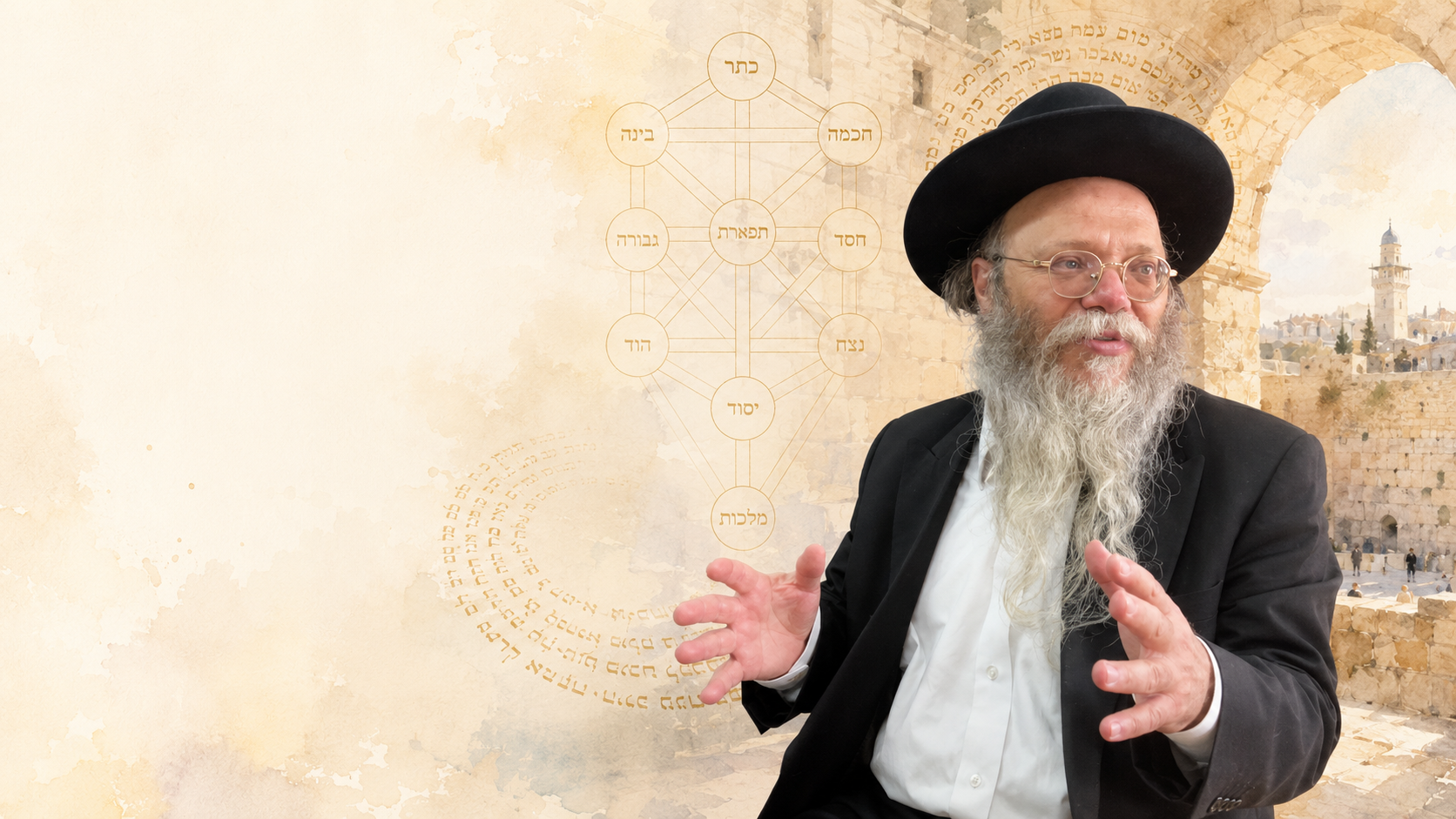
The Zohar explains that the ability to interpret dreams comes through Gavriyeil Hamalach (the angel Gabriel), who is the conduit for dream interpretation. Gavriyeil is linked to the Sefira of Gevurah (Might, Judgment). Gevurah very strongly affects Malchus, through which the vision of a dream or prophecy comes. So strong is the influence of Gevurah over Malchus that Malchus is tilted to the left side, the side of judgment. This is the reason why we work to sweeten the judgments, specifically the judgments which are within the Shechinah, which is the Malchus.
As interpreters of dreams, there is a key difference between Yoseif and Daniyeil. Yoseif had wisdom, Daniyeil had vision. Yoseif used wisdom to see through the words of Paroh to the higher levels where the dream originated and to see the path forward. Yoseif’s wisdom was the reason he became the main authority in Mitzrayim under Paroh.
And why did Hashem essentially give the revealer of dreams the strongest kingdom in the ancient world? The Torah teaches the principle of measure for measure; actions are linked to reward and punishment. We see this principle in operation in Yoseif’s life. Since Yoseif did not sin with his mouth, he controlled Mitzrayim with his words. Since Yoseif did not sin with his hand, they placed a ring on it. Since Yoseif did not sin with his neck, they placed jewelry on it. Since his body did not sin, they gave him royal garments. And the legs that did not sin were awarded the privilege of stepping on Paroh’s chariot to rule over Mitzrayim. Most importantly, since Yoseif did not fall in his thoughts or his heart, he received the wisdom to successfully interpret Paroh’s dream and rule Mitzrayim (Zohar Miketz 5:64).
Receiving the reward
Yoseif’s life strikes a chord within each of us. Many times we face challenges in our lives and go through tests from Hashem. In the face of them, it is hard to act according to Torah values and strengthen our relationship with Hashem. It is helpful to remind ourselves that even a little effort to strengthen ourselves against the yeitzer hara (evil inclination) and to fight to dedicate our lives and hearts to Hashem is not ignored. Hashem takes into account our every effort and they will be rewarded in proportion to our effort. His rewards are endless and nothing can happen without His permission.
As much as we are focused on serving Hashem and working to conquer all of our lust and desires, we can know that every little effort will be rewarded. And while Yoseif was always aware of the rewards that were in store for him, during his imprisonment in Egypt, he had matured spiritually and personally despite great loss, disappointment, suffering, and temptation. We too, like Yoseif, can maintain our integrity in the face of great suffering and temptation. As we grow spiritually and in character, we will not be motivated so much by reward, as acting for the sake of Hashem’s Name. And really, most of the reward comes from the merit of our fathers, so we should not be proud.
Sending all our readings a big blessing, that Hashem will help us all to be a chariot to receive the presence of the Shechinah and the blessings that come with it, and to remember and to know that it is not about what we do, it is about what Hashem wants to give; all the blessings that we have, all the blessings that we are experiencing, are only a little compared to what Hashem wants to give us. And as much as we are preparing ourselves, preparing the vessel, by going in the way of the Torah, and following the mitzvos, and doing constant teshuva, and working on ourselves, to perfect our character traits, this is the way to make ourselves a vessel that can contain those blessings. Bracha v’hatzlacha.
Thank you very much for listening. Now please share it with others, that it will inspire, as much as possible, the whole world, bezras HaShem. Amein, ken yehi ratzon.
Rabbi Yaakov Avraham Shepherd is the head of Yeshivas HaMekubalim Nefesh HaChaim on Mount Zion, Jerusalem, and Head Kabbalist at King David Kabbalah, having learned Kabbalah with Yeshivas Beit Eil in Jerusalem. He has also been teaching at Diaspora Yeshiva for over 15 years, where he has taught Chumash, Navi, Gemara, Shulchan Aruch and more, in English and Hebrew. More…